* All product/brand names, logos, and trademarks are property of their respective owners.
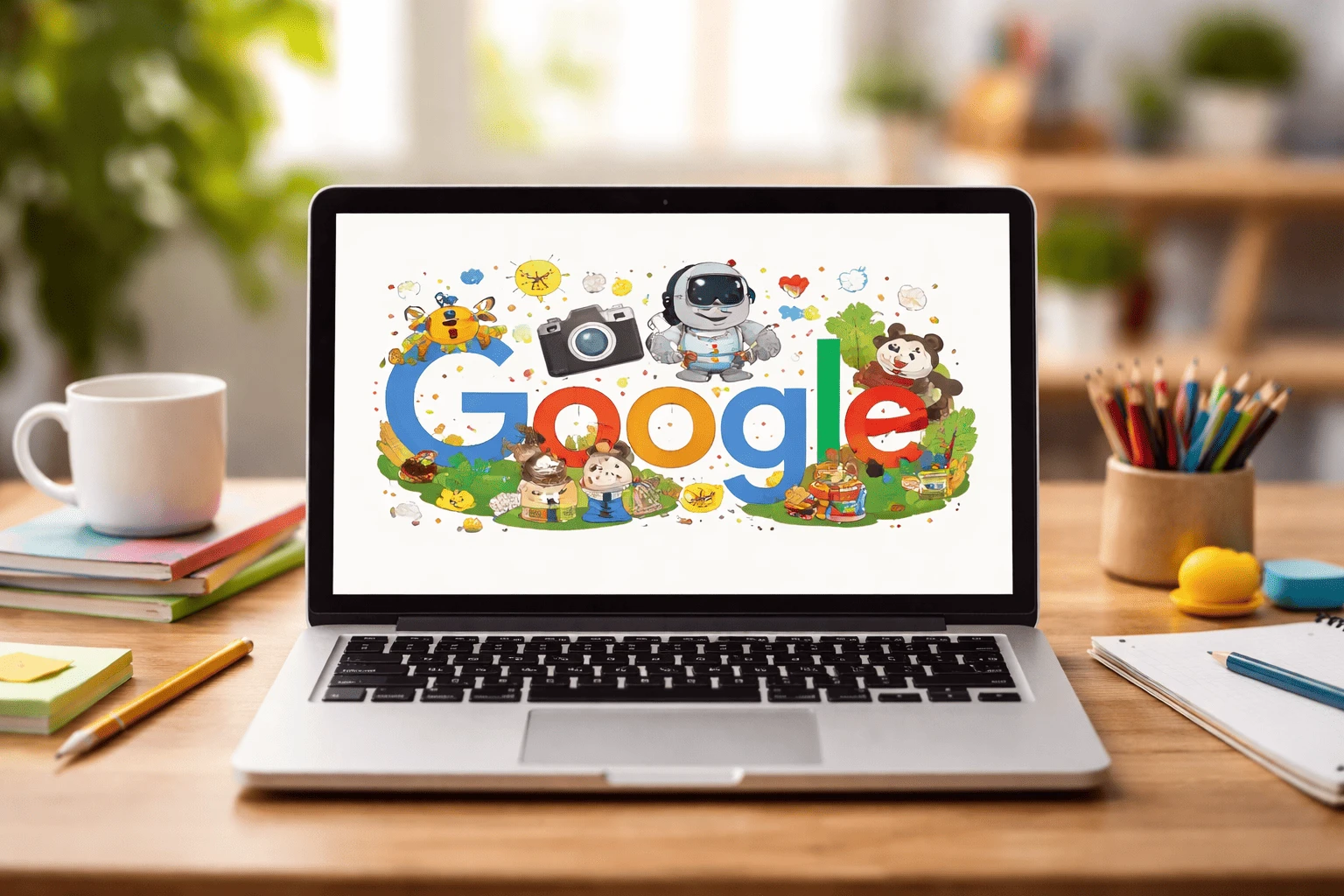
When you open Google, that simple logo sometimes turns into something unexpected — colorful, animated, or even interactive. That’s a Google Doodle. And every day, millions of people search for “Google Doodles Today” to find out what it represents and why it’s there.
Some doodles celebrate global events, while others highlight important figures, anniversaries, or cultural moments from around the world. But often, the meaning behind them isn’t immediately obvious.
In this article, you’ll find the latest Google Doodle update, what it means, and the story behind it — all explained in a clear, easy way.
As of April 14, 2026, today’s Google Doodle highlights World Quantum Day, a global observance focused on improving public understanding of quantum science and technology. Google’s official Doodles archive shows a dedicated World Quantum Day Doodle, and the event’s own site confirms that April 14 is the annual celebration date.
Quick snapshot:
At a glance, this means Google is using its homepage artwork today to spotlight a science event with global relevance rather than a local holiday or a single-country celebration.
Today’s Google Doodle celebrates World Quantum Day, and its meaning goes beyond just a scientific label — it’s about making complex ideas more accessible to everyone.
At its core, quantum science studies how the smallest particles in the universe behave — things like atoms and photons. These behaviors power technologies we already use today, even if most people don’t realize it.
World Quantum Day is not tied to one country. It’s a global initiative, which makes it a perfect fit for a Google Doodle that appears across multiple regions.
Here’s why it’s significant:
If the doodle looks abstract or technical, here’s the easy way to understand it:
It’s Google’s way of saying:
“The tiny, invisible world of particles plays a huge role in your everyday life.”
From smartphones to secure online transactions, quantum science is already working behind the scenes.
This section helps readers move from “What is this doodle?” to “Why should I care?” — something most competitor articles miss.
Google creates doodles to mark important events, milestones, and global observances, and today’s feature is no exception. The World Quantum Day Doodle was designed to bring attention to a field that’s shaping the future but often feels distant or complex to the average person.
Google Doodles aren’t random. They’re carefully selected to:
In this case, the focus is on science education and innovation, which aligns with Google’s broader mission to organize and share knowledge.
To really understand today’s Google Doodle, it helps to look at where World Quantum Day comes from and why it exists in the first place.
World Quantum Day is a global initiative launched by scientists, educators, and research organizations who wanted to make quantum science more visible and easier to understand.
Instead of keeping complex ideas limited to labs and universities, the goal was simple:
Quantum science isn’t new. In fact, it dates back over a century.
Some of the biggest breakthroughs include:
Even though it sounds highly technical, quantum science plays a role in things people use every day:
That’s exactly why events like World Quantum Day — and Google Doodles like this one — matter.
They take something complex and make people stop and think:
“This invisible science is shaping the world around me.”
Here are some quick, scannable facts to help you understand today’s doodle at a glance:
Google Doodles might look simple on the homepage, but there’s actually a thoughtful process behind each one.
Google has a dedicated team called the “Doodlers.”
This group includes:
They work together to turn ideas into creative visuals that appear on the Google homepage.
Not every event becomes a doodle. Google selects topics based on:
Google also accepts public suggestions, though final decisions are made internally.
Not all doodles look the same. They come in different formats:
Some of the most popular doodles are interactive, where users can actually play or explore something.
That’s why sometimes people in different countries see different doodles on the same day.
Google updates doodles frequently:
If you don’t check Google’s homepage every day, it’s easy to miss some interesting doodles. Here are a few recent ones that grabbed attention globally:
| Date | Doodle Theme | What It Celebrated |
|---|---|---|
| April 2026 | Earth Day (early feature) | Environmental awareness and sustainability |
| April 2026 | Cultural Festival Doodle | Regional celebration shown in select countries |
| March 2026 | Famous Scientist Tribute | Honoring contributions to science |
| March 2026 | Women’s History Month | Highlighting influential women globally |
Looking at recent doodles, a few patterns stand out:
This gives readers a broader view beyond just today’s doodle:
Google Doodles are more than just creative logo changes — they’re small windows into important moments, ideas, and achievements from around the world. Today’s Google Doodle highlights World Quantum Day, bringing attention to a field that quietly powers much of modern technology.
By understanding the meaning behind these doodles, you’re not just seeing a design — you’re connecting with the story, science, or culture it represents.
If you’ve ever been curious about Google Doodles Today, taking a few seconds to explore them can turn a simple search into something surprisingly informative.
And with new doodles appearing regularly, there’s always something new to discover the next time you open Google.

I am Zeenat, an SEO Specialist and Content Writer specializing in on-page and off-page SEO to improve website visibility, user experience, and performance.
I optimize website content, meta elements, and site structure, and implement effective off-page SEO strategies, including link building and authority development. Through keyword research and performance analysis, I drive targeted organic traffic and improve search rankings.
I create high-quality, search-optimized content using data-driven, white-hat SEO practices, focused on delivering sustainable, long-term growth and improved online visibility.
For more than two decades, Google’s search box has been one of the simplest and most recogniza
22 May 2026
Google has entered one of those phases where it feels like every week brings another shift. One day
22 April 2026
If your rankings have felt unstable lately, you are not imagining it. Google has continued rolling o
10 April 2026
Be the first to share your thoughts
No comments yet. Be the first to comment!
Share your thoughts and join the discussion below.