* All product/brand names, logos, and trademarks are property of their respective owners.
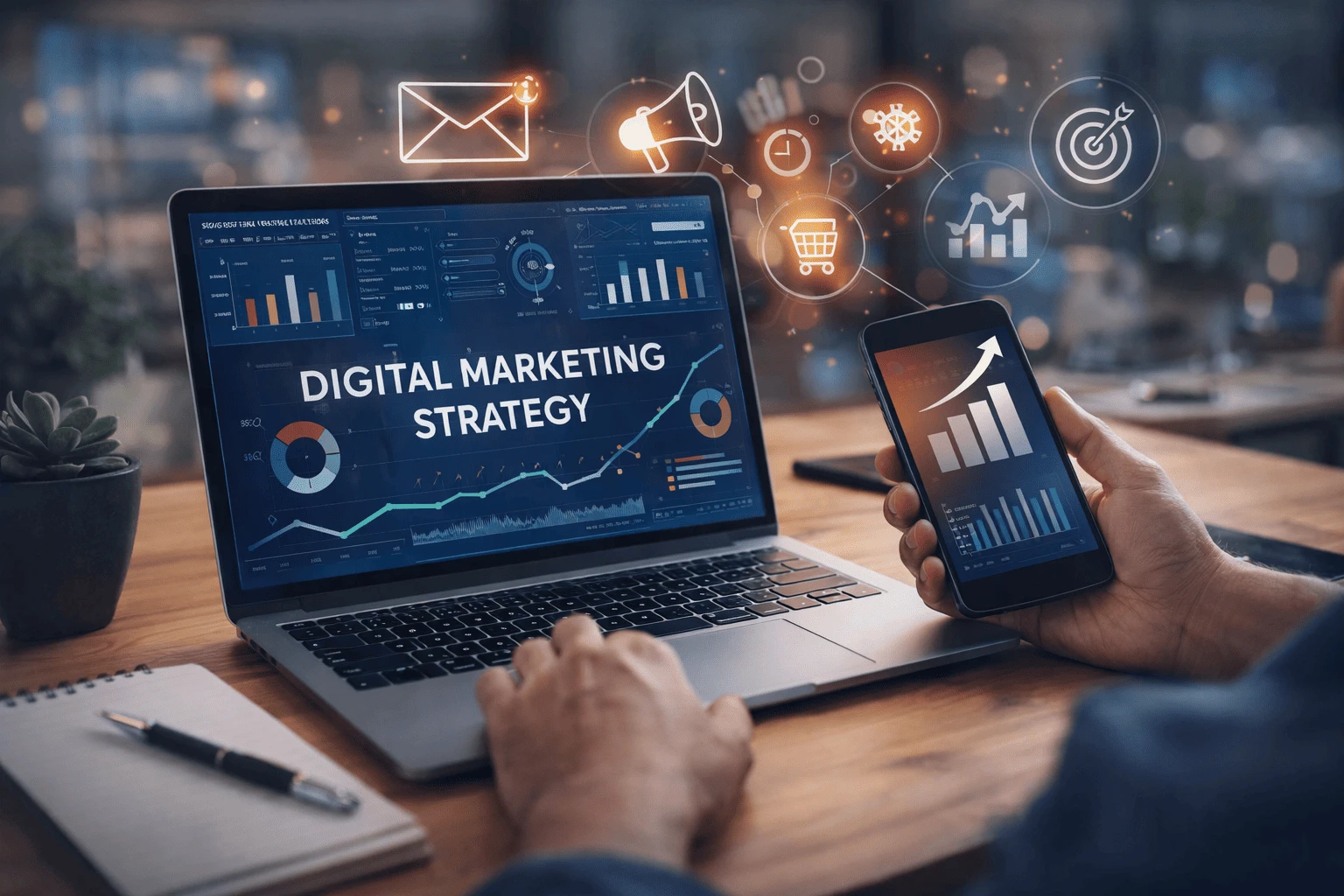
In today’s fast-paced digital landscape, randomly posting on social media, running sporadic ads, or sending occasional emails is no longer enough. Businesses that succeed online have one thing in common: a clear, focused, and consistent digital marketing strategy that aligns with their goals and delivers measurable results. A well-crafted strategy does more than drive traffic. It helps you identify your target audience, solve their problems, nurture leads, and turn them into loyal customers. Without a roadmap, every action is a guess—and in marketing, guessing can be costly.
Creating an effective strategy isn’t about massive budgets or complex tools. It’s about clarity: knowing who you’re reaching, selecting the right channels, providing value, and continuously measuring performance.
This guide will break the process into practical steps, showing you how to lay a solid foundation, choose platforms that fit your audience, design campaigns that resonate, and maintain a plan that grows with your business. Whether you’re a solo marketer, startup founder, or part of a growing team, these insights will help you build a strategy that consistently delivers results.

A digital marketing strategy is the overarching plan that guides all your online marketing efforts. Unlike short-term campaigns or daily tactics, a strategy is a long-term roadmap for achieving business objectives through digital channels like websites, social media, search engines, email, and paid ads.
Campaigns are focused efforts with specific goals, and tactics are day-to-day actions like posting content, running ads, or sending newsletters. The strategy ties everything together, answering crucial questions:
Who is our target audience?
What problems are we solving for them?
Which platforms should we use and why?
How will we measure success?
With a clear strategy, teams stay aligned, marketing efforts are coordinated, and results become measurable.
A successful digital marketing strategy rests on five core pillars:
1. Target Audience Clarity
Effective marketing starts with knowing who you’re communicating with. Build detailed buyer personas considering demographics, interests, behaviors, and pain points. Clear audience insights guide messaging, content creation, and platform selection.
2. Content That Connects
Consumers want solutions, not sales pitches. Content should educate, solve problems, and reflect your brand’s voice. Include blogs, videos, social posts, and emails designed to build trust and engagement.
3. Right Channels for Reach
Select platforms where your audience spends their time:
SEO for sustainable organic traffic
Social media for engagement and brand visibility
Email for nurturing leads
PPC for quick results and retargeting
A mix that aligns with your goals and resources ensures efficiency.
4. Budget and Timeline
Set realistic budgets and timelines for campaigns and initiatives. Consider regional variations if operating internationally, and plan resources to maximize ROI without overextending.
5. Metrics That Matter
Define key performance indicators (KPIs) linked to objectives, such as traffic, conversions, engagement, or customer lifetime value. Use tools like Google Analytics, SEMrush, or HubSpot to track progress and refine your approach.

A strong strategy begins with understanding your current digital footprint. Conduct a full audit of:
Website – mobile responsiveness, speed, SEO optimization
Content – relevance, quality, and consistency
SEO – keyword rankings and organic reach
Social Media – presence and engagement levels
Competitors – gaps to fill and opportunities to differentiate
Once the audit is complete, set SMART goals (Specific, Measurable, Achievable, Relevant, Time-bound), such as:
Increase organic traffic by 40% within six months
Generate 100 qualified leads monthly via LinkedIn
Grow email subscribers by 5,000 by year-end
Breaking goals into quarterly milestones ensures progress can be measured and adjustments can be made efficiently.
Not every platform is suitable for every business. Choose channels based on audience behavior, objectives, and budget.
SEO – drives long-term, sustainable traffic
Social Media – builds awareness and engagement
Email Marketing – nurtures leads and encourages repeat sales
PPC / Paid Ads – delivers fast visibility and retargeting opportunities
Global Focus: For international campaigns, tailor messages and channels by region. For example, Instagram may work well in China, while LinkedIn or TikTok may be more effective in the U.S. or UAE.
Omnichannel Approach: Channels should work together, not in isolation. Use SEO to drive blog traffic, social media to maintain visibility, and email marketing to nurture leads. Integrated campaigns amplify results.
After defining goals and channels, implement your strategy:
Develop content and campaigns aligned with objectives
Use project management tools like Trello, Notion, or Monday to plan and track timelines
Set up tracking systems with Google Analytics, Meta Business Suite, or email automation platforms
Track performance regularly using KPIs, including:
Website traffic and bounce rates
Email and ad click-through rates (CTR)
Social media engagement metrics
Conversion rates and ROI
Continuous improvement is key. Conduct A/B testing, optimize underperforming content, scale successful campaigns, and remain flexible to evolving trends.

Objective: Generate qualified leads through SEO-focused educational content.
Highlights:
Robust blog targeting marketing, sales, and CRM keywords
Downloadable resources like eBooks and templates for lead capture
Automated email nurturing and CRM personalization
Results:
Millions of monthly blog visits from organic search
High lead conversion from content downloads
Recognized globally as an inbound marketing authority
Takeaway: High-quality educational content combined with SEO and lead nurturing drives measurable growth.
Objective: Increase online engagement and drive e-commerce sales through social media campaigns.
Highlights:
Leveraged Instagram and TikTok to showcase products with short-form video content and influencer collaborations
Ran targeted paid campaigns on multiple social platforms during key shopping periods
Used direct messaging and chat tools for customer support and order follow-ups
Results:
250–300% growth in online sales within six months
Short-form video content reaching over 1M organic views
Lowered customer acquisition costs compared to prior campaigns
Takeaway: A social-first approach with engaging content and targeted campaigns can drive fast growth and cost-efficient results, applicable to brands across regions.
Objective: Build international brand awareness and drive email sign-ups.
Highlights:
Multilingual blog focused on solving customer pain points
Integrated SEO, Google Ads, and LinkedIn Ads campaigns
Offered a free tool in exchange for email sign-ups
Results:
Website traffic doubled globally in four months
The email list grew from 3,000 to 12,000 subscribers
Entered three new regional markets successfully
Takeaway: Combining paid and organic marketing with localized SEO accelerates growth and awareness.

An effective digital marketing strategy isn’t about chasing trends or copying competitors. It’s about clarity, consistency, and delivering real value to your audience. By understanding your goals, choosing the right channels, creating campaigns thoughtfully, and learning from real-world examples, you can build a strategy that adapts as your business evolves. Remember, a strategy is a living process. Regularly track performance, test campaigns, and refine your approach. Over time, small, focused improvements compound into significant results.
To help you get started, consider using a strategy template to map out your 12-month plan. Customize it to your business, and use it as a reference to stay organized and focused. Your next step: Start by auditing your current digital presence, identifying one area to improve, and implementing a small, actionable change today. Each step you take builds toward a stronger, more effective digital marketing engine.

Waqar Azeem is a digital marketing and web development specialist who bridges the gap between marketing and engineering. On the marketing side, he works extensively with Google Ads, Google Merchant Center, and Google Analytics — managing campaigns, product feeds, and conversion tracking to help businesses grow their online visibility and sales. On the development side, he builds and maintains web applications using Yii2 and Next.js, giving him a rare ability to handle both the technical infrastructure and the marketing performance of a website. This combined skill set lets him approach projects holistically, ensuring that what gets built is also built to perform.
Social media marketing in Pakistan is no longer just about posting regularly. In 2026, marketers nee
3 June 2026
Growing a SaaS product in a competitive global market is not just about building a great tool. It is
11 April 2026
In today’s fast-moving world of digital marketing, content is king — but keeping up with
15 January 2026
Be the first to share your thoughts
No comments yet. Be the first to comment!
Share your thoughts and join the discussion below.


.webp&w=3840&q=75)