
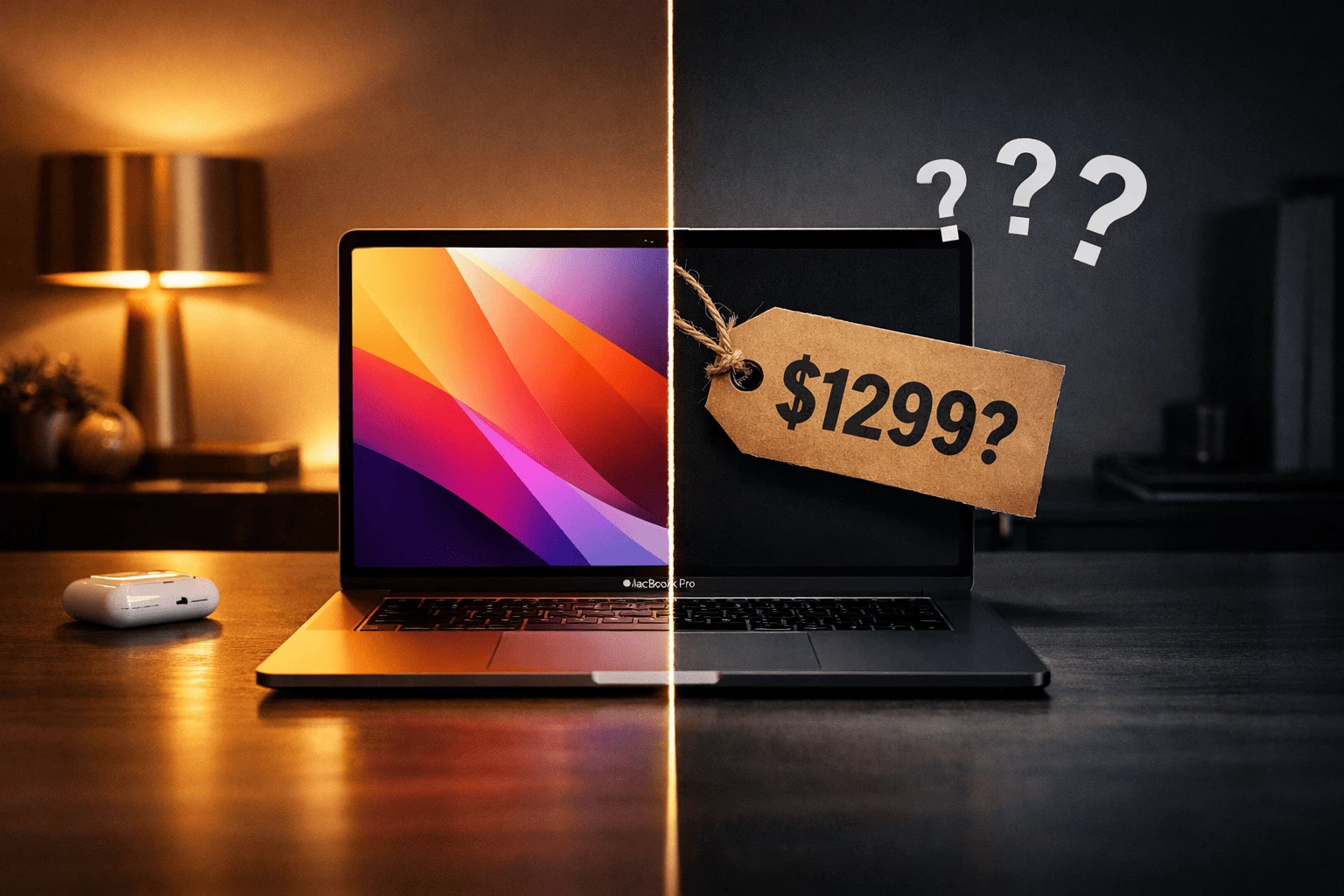
* All product/brand names, logos, and trademarks are property of their respective owners.
The MacBook Pro has built a reputation that few laptops can match. For some, it’s the ultimate productivity machine. For others, it’s just an expensive status symbol wrapped in sleek aluminum.
Scroll through any tech discussion, and you’ll see the same debate pop up again and again: Is the MacBook Pro actually worth it, or is it just overhyped?
Part of the confusion comes from how widely it’s used. You’ll see developers coding on it, video editors swearing by it, and students stretching their budgets just to own one. At the same time, there are plenty of powerful Windows laptops that cost less and promise similar performance.
So what’s the truth?
This article takes a clear, practical look at whether the MacBook Pro is worth it in real-world use—not just on paper. No hype, no blind criticism—just an honest breakdown to help you decide if it deserves your money.
The MacBook Pro gets more attention than most laptops because it sits at the intersection of performance, design, and brand appeal. It is not just a computer people buy for work. For many buyers, it also feels like a premium product with a strong identity.
A few things drive that hype.
Apple products usually carry a “best-in-class” image, and the MacBook Pro benefits from that. It is marketed as a serious machine for serious work, which makes people assume it must be better than typical laptops before they even compare specs.
That branding matters because perception shapes demand. A lot of buyers do not just want a laptop that works well. They want one that feels refined, reliable, and premium.
One of Apple’s biggest strengths is control over both the device and the operating system. That tight integration often leads to:
This is one reason MacBook Pro users often talk less about raw specs and more about how the laptop feels in everyday use.
When Apple moved to its own silicon, the MacBook Pro became harder to dismiss as just a stylish laptop. Performance improved, battery life got much better, and the machines started earning more respect from professionals who care about speed and efficiency.
That shift gave Apple something more than marketing hype. It gave people real performance results to point to.
The MacBook Pro shows up everywhere:
When a product is constantly visible in professional spaces, it starts to feel like the default premium choice. That visibility reinforces the idea that it must be worth the price.
This is where the hype debate becomes more interesting. The MacBook Pro is a capable machine, but it is also a status product for some buyers. People are not always paying only for performance. Sometimes they are paying for the design, the Apple logo, the ecosystem, and the feeling of owning a high-end device.
That does not make it bad. It just means the hype comes from both real strengths and emotional appeal.
At its best, the MacBook Pro earns attention because it delivers a polished, powerful experience. At its worst, it gets praised by people who may never use enough of its power to justify the price. That is exactly why the “overhyped or worth every dollar” debate continues.
The MacBook Pro is expensive, but the price is not only about the Apple logo. A big part of the cost comes from the overall package. Apple is selling a laptop that combines premium hardware, strong performance, and a polished user experience in one device.
Here is what buyers are really paying for.
The MacBook Pro feels expensive because it is built that way. The aluminum body is solid, durable, and clean-looking. It usually feels more refined than many plastic or mixed-material laptops.
That matters in daily use because a laptop that feels sturdy tends to age better physically. Hinges, keyboard deck, and trackpad quality all affect how premium a device feels after a year or two.
The MacBook Pro is known for handling demanding work without feeling unstable or noisy. Whether someone is editing video, running development tools, or managing heavy multitasking, the performance tends to stay smooth.
This is one of the biggest reasons professionals are willing to pay more. It is not just about power on day one. It is about getting reliable speed without constant slowdowns.
Battery life is a major selling point. Many laptops perform well when plugged in, but fewer maintain that balance of power and efficiency on battery. The MacBook Pro stands out because it often gives users long hours of work without making big performance sacrifices.
For people who travel, work remotely, or move between meetings, that convenience adds real value.
Some of the price goes toward the software experience. macOS is a big part of why many users stick with MacBooks. It is generally clean, smooth, and tightly integrated with the hardware.
That can make everyday tasks feel easier, especially for people already using other Apple devices like an iPhone or iPad. Features such as file sharing, messaging, copy-paste between devices, and synced workflows add convenience that some users rely on heavily.
The MacBook Pro also earns praise for media quality. The display is sharp, color-accurate, and bright, which is useful for both creative work and everyday viewing. The speakers are also much better than what many laptops offer.
These things may sound secondary, but they improve the experience every single day. A better screen and better sound make the laptop feel more complete.
Apple’s trackpads are widely seen as some of the best on any laptop. They are responsive, precise, and comfortable to use. The keyboard experience is also solid on newer models, which matters for anyone typing for hours at a time.
This may not be the headline feature, but it adds to the overall value in a way that specs alone do not show.
For some buyers, this is a major reason the price feels justified. If you already use Apple products, the MacBook Pro fits into that setup naturally.
That includes benefits like:
For people outside the Apple ecosystem, this may not matter much. For people already inside it, it can be a real advantage.
The MacBook Pro is not cheap because of one standout feature. It is expensive because it combines many strengths in one machine:
That does not automatically make it a smart purchase for everyone. But it does explain why many buyers feel they are paying for more than hype.
No laptop is perfect, and the MacBook Pro is no exception. It does a lot of things extremely well, but there are also clear downsides that get overlooked in the hype.
| Pros | Cons |
|---|---|
| Consistent high performance for demanding tasks | High price tag compared to alternatives |
| Excellent battery life even under heavy use | Limited upgradeability (RAM/storage cannot be changed later) |
| Premium build quality and durability | Not ideal for gaming |
| Smooth, optimized macOS experience | Some software works better on Windows |
| High-quality display with accurate colors | Fewer budget-friendly options |
| Best-in-class trackpad and strong keyboard | Can be overkill for basic users |
| Strong resale value over time | Ecosystem lock-in (works best with Apple devices) |
When people compare the MacBook Pro to Windows laptops, they’re usually deciding between polished consistency vs flexibility and price. Both sides have strong options, so the better choice depends on how you plan to use your laptop.
Here’s a clear side-by-side comparison:
| Feature | MacBook Pro | Windows Laptops (Dell XPS, HP Spectre, etc.) |
|---|---|---|
| Performance | Highly optimized, consistent performance (especially with M-series chips) | Can match or exceed performance, but varies by model |
| Price | Premium pricing across all models | Wider range from budget to premium |
| Battery Life | Excellent, often industry-leading | Good, but usually less consistent |
| Build Quality | Very high, uniform across lineup | Varies by brand and price |
| Software Compatibility | Best for macOS apps, limited for some Windows-only tools | Supports wider range of software and games |
| Gaming | Limited support | Strong gaming support and GPU options |
| Upgradeability | Very limited | Often upgradeable (RAM, storage) |
| Ecosystem | Seamless with Apple devices | More open, works with all ecosystems |
| User Experience | Smooth, polished, minimal bugs | Depends on brand and configuration |
The MacBook Pro is not meant for everyone—and that’s exactly why it works so well for the right people. If your work actually uses its strengths, it can feel worth every dollar.
Here’s who gets the most value from it:
Especially useful for web, app, and software developers.
If your work involves 4K/8K video, this is where the MacBook Pro really shines.
It’s a “just works” machine, which matters when your work depends on it.
If you already use Apple products, the experience feels much smoother.
The MacBook Pro is worth it if:
If that sounds like you, the price starts to make more sense.
The honest answer is: it depends on who’s buying it.
The MacBook Pro is not just hype. It delivers real value where it matters—performance, battery life, build quality, and a smooth overall experience. For professionals, creators, and power users, it can absolutely feel worth every dollar because it saves time, reduces friction, and stays reliable for years.
At the same time, it is overhyped for a large group of users.
If your needs are basic, or you’re buying it mainly for the brand, you’re paying a premium for features you won’t fully use. In that case, a more affordable laptop can give you nearly the same practical experience for much less money.
In the end, the MacBook Pro isn’t overpriced by accident—it’s just very easy to overbuy if you don’t actually need what it offers.

I am Zeenat, an SEO Specialist and Content Writer specializing in on-page and off-page SEO to improve website visibility, user experience, and performance.
I optimize website content, meta elements, and site structure, and implement effective off-page SEO strategies, including link building and authority development. Through keyword research and performance analysis, I drive targeted organic traffic and improve search rankings.
I create high-quality, search-optimized content using data-driven, white-hat SEO practices, focused on delivering sustainable, long-term growth and improved online visibility.
AI chatbots have quickly become part of everyday work, from writing content and answering questions
16 April 2026
Digital transformation has become one of the most talked-about priorities for modern businesses. Org
9 February 2026
In today’s fast-paced business world, staying competitive means being faster, more efficient,
16 January 2026
Be the first to share your thoughts
No comments yet. Be the first to comment!
Share your thoughts and join the discussion below.

.webp&w=3840&q=75)