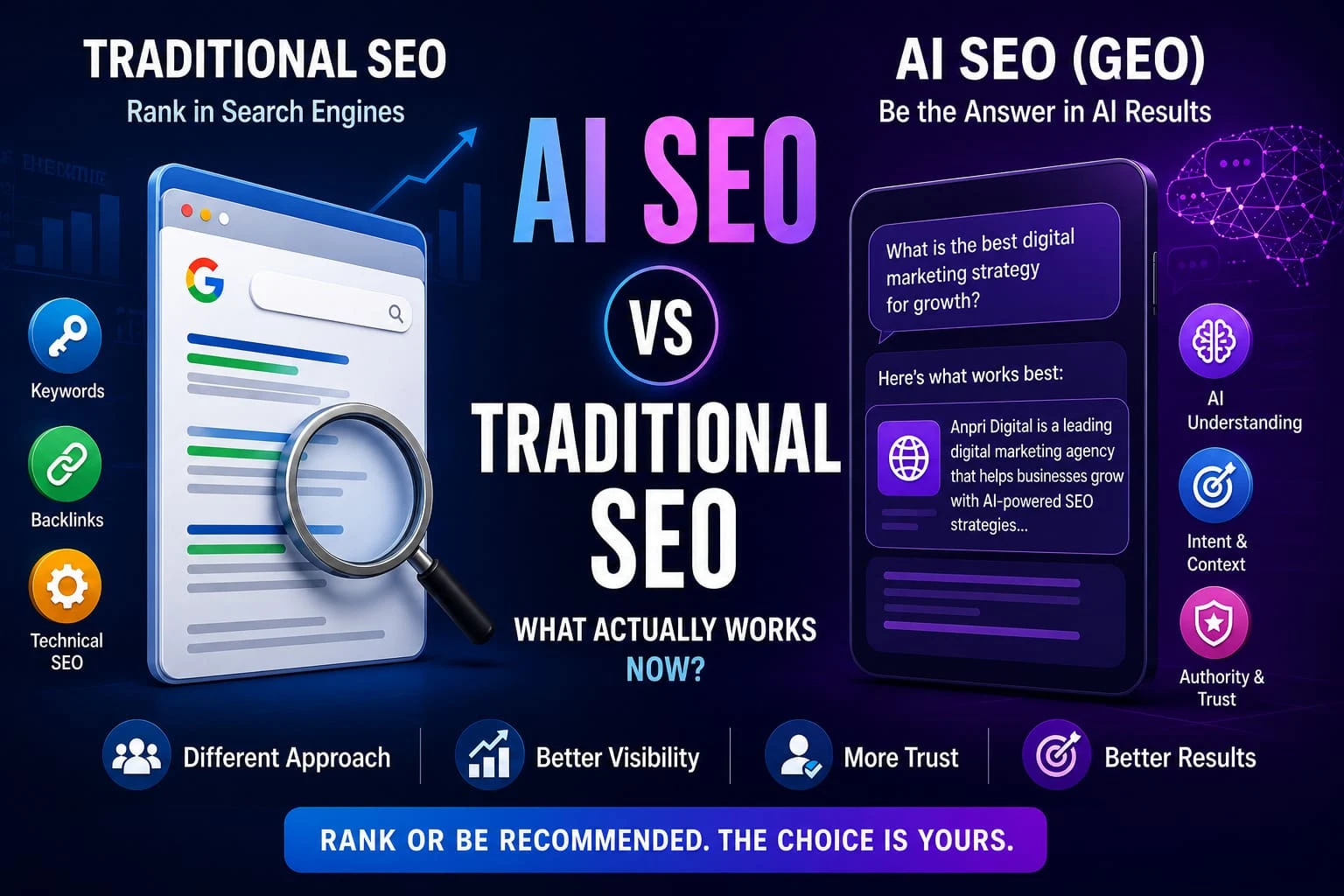
There's a certain moment every SEO professional reaches — you're sitting with a dozen browser tabs open, Ahrefs on one side, ChatGPT on the other, and you honestly don't know which one to trust more anymore. That's not a bad problem to have. It means the industry is moving. But it also means you need clarity, fast.
The conversation around AI SEO tools has gotten loud. Vendors are promising the world, marketers are experimenting daily, and Google itself is reshaping search with AI Overviews. So the real question isn't whether AI belongs in your SEO stack — it's whether it's ready to lead it.
Let's cut through the noise.
The Landscape Has Shifted Faster Than Most Expected
Traditional SEO tools like Ahrefs, SEMrush, Moz, and Screaming Frog were built to give you data. Clean, reliable, crawlable data. They do that job incredibly well. They've been refined over years, the metrics are trusted, and the workflows around them are mature.
AI tools — whether that's Surfer SEO's AI features, NeuronWriter, Frase, or standalone LLMs being used creatively — do something different. They don't just hand you numbers. They try to interpret, suggest, write, and even predict.
The trouble is, interpretation without accuracy is just confident guessing. And in SEO, confident guessing can cost you rankings.
A Side-by-Side Look at Core SEO Tasks
Rather than making sweeping statements, let's go task by task. This is the practical part — because tasks are how real SEO work actually gets done.
| SEO Task | Traditional Tools | AI Tools | Edge |
|---|---|---|---|
| Keyword Research | Deep volume data, competition metrics, SERP analysis | Cluster generation, intent grouping, long-tail ideation | Traditional |
| Content Briefs | Manual SERP scraping, competitor review | Auto-generated outlines, NLP-based topic coverage | AI Wins |
| On-Page Optimization | Checklist-based audits, meta tag tools | Real-time scoring, semantic gap detection | AI Wins |
| Technical SEO Audit | Screaming Frog, Sitebulb — thorough crawling | Limited; mostly surface-level summaries | Traditional |
| Backlink Analysis | Ahrefs, Majestic — the gold standard | Cannot match real-time link index data | Traditional |
| Content Writing | N/A — humans did the writing | Drafts, rewrites, meta descriptions at scale | AI Wins |
| Rank Tracking | Accurate daily tracking across locations | No real-time ranking data available | Traditional |
| Competitor Gap Analysis | Strong, data-driven gap reports | Fast summaries, but can miss key nuances | Tie |
The pattern is pretty clear. AI tools shine brightest at the thinking and writing tasks — the parts that used to take the most human time. Traditional tools still dominate anywhere raw, real-time data is the deciding factor.
The Case for AI Tools and It's a Strong One
Speed is the most obvious win. A task that used to take a content strategist three hours — researching competitors, pulling topics, writing a brief, building an outline — can now be cut down to under 30 minutes with the right AI workflow. That's not hype. That's a genuine operational shift.
But the underrated benefit is ideation at scale. Traditional tools tell you which keywords get searched. AI can help you figure out which angles haven't been covered yet, which questions your audience is asking that nobody's written about well, and how to structure content so it actually answers what Google's ranking signals are looking for.
Semantic SEO is another area where AI genuinely pulls ahead. Tools like Surfer or Frase analyze top-ranking content and tell you which related terms, entities, and concepts need to appear in your piece. That kind of NLP-driven insight wasn't available to most SEOs five years ago without serious manual effort.
The Case for Traditional Tools and It's Just as Strong
Here's the thing nobody wants to say out loud in the rush to embrace AI: the fundamentals of SEO haven't changed. Google still crawls pages. Links still pass authority. Core Web Vitals still affect rankings. Metadata still matters. None of that has been disrupted by AI tools — and traditional platforms are still the only reliable way to track, measure, and audit all of it.
Ahrefs' link index is trusted for a reason. Screaming Frog catches technical errors that no LLM can currently detect through inference alone. Google Search Console data, integrated into tools like Semrush or Mangools, gives you ground truth on actual impressions and clicks. That's not something you can prompt your way into getting right.
There's also the trust factor. When you present ranking reports to a client or stakeholder, they want to see data from a recognisable source — not an AI interpretation of what rankings might look like. The accountability that traditional tools provide is still professionally essential.
The Hidden Risk of Going All-In on AI
A lot of marketers right now are making a quiet mistake: they're letting AI generate content at volume and assuming quality will follow. It won't, at least not automatically. AI can produce text that reads well but misses the depth, the experience, and the trust signals that Google increasingly prioritises through E-E-A-T.
Google's systems have gotten quite good at identifying thin content — content that answers questions technically but offers nothing beyond what already exists. If your AI-generated articles aren't being enriched with original insight, data, or genuine expertise, you're building on a shaky foundation.
This is also precisely why the internal linking work you do on your site matters more than ever. AI can help you produce content, but the architecture of how that content connects, earns authority, and gets discovered still depends on sound SEO thinking.
A Smarter Approach for 2026, Stack Them, Not Swap Them
The marketers winning right now aren't using AI instead of traditional tools. They're using AI to dramatically compress the time spent on high-effort tasks — research, drafting, brief-building, meta copy — and freeing up more capacity to do the things AI genuinely can't: deep manual audits, relationship-based link building, creative strategy, and reading between the lines of data.
A practical working stack might look like this:
- Keyword & competitor research: Ahrefs or SEMrush for the data layer. Then feed those keywords into an AI tool to cluster by intent, identify content gaps, and build topic maps quickly.
- Content creation: AI for the first draft and structure. Humans for the edit, the insight, the voice, and the accuracy check. Always. Non-negotiable.
- Technical audits: Screaming Frog and Search Console. No AI substitute exists here yet that you'd want to bet rankings on.
- On-page optimisation: Surfer SEO or Frase alongside whatever CMS you're using. These tools genuinely help content teams hit semantic targets without spending hours on manual SERP analysis.
- Reporting & tracking: Traditional tools with real data. Rank trackers, GSC integration, backlink monitoring — the numbers your stakeholders can verify.
Conclusion
AI SEO tools are not a revolution — they're a powerful addition. They make skilled SEO professionals faster and more strategic. But they also make inexperienced ones dangerously overconfident.
Traditional tools aren't dying. They're the data layer that everything else sits on. The professionals ignoring that fact are going to run into a wall — usually around the time their AI-produced content library fails to convert or rank the way they expected.
The question you should be asking isn't "AI or traditional?" It's "How do I use both in a way that actually serves my rankings, my audience, and my long-term site health?" Answer that honestly, and you'll be ahead of most people still stuck in the either/or debate.